
Summary: This blog explores achieving faculty excellence in data science and AI by leveraging industry instructor insights. It highlights the importance of faculty development in AI and data science through collaboration. Learn how Pickl.AI’s specialized programs empower educators with real-world expertise, bridging the gap between academic theory and industrial application.
Introduction
The world of technology moves at a breakneck pace. In the time it takes for a traditional academic textbook to be written, edited, and published, the field of Artificial Intelligence (AI) has often moved two steps ahead. For higher education institutions, this creates a significant challenge: how do you maintain teaching standards when the subject matter changes every six months?
The answer lies in faculty excellence in data science and AI. True excellence in today’s environment is no longer just about academic research; it is about bridging the gap between theoretical math and industrial application. By integrating insights from industry instructors in data science and AI, universities can ensure their educators remain at the cutting edge of the digital revolution.
What Does Faculty Excellence Mean in Data Science and AI?
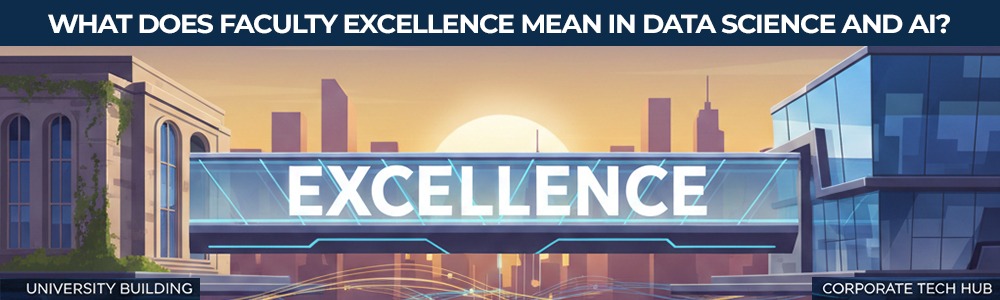
In most subjects, faculty excellence is measured by research papers and years of teaching. However, in Data Science and AI, the definition has shifted. Faculty excellence in data science and AI now refers to an educator’s ability to teach students not just how an algorithm works, but where and why it is used in a multi-million dollar business environment.
An excellent faculty member today understands:
- The Lifecycle of Data: From messy real-world collection to cloud deployment.
- Tool Fluency: Moving beyond basic coding to using professional platforms like Docker, Kubernetes, and advanced Generative AI frameworks.
- Ethics and Governance: Understanding the legal implications of AI in a corporate setting.
Who Are Industry Instructors in Data Science and AI?
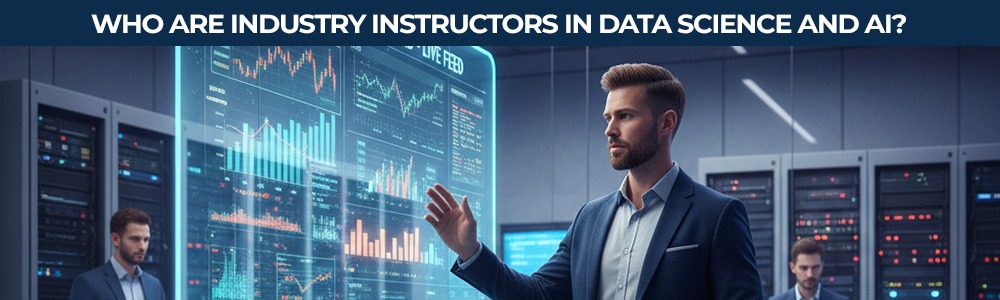
Industry instructors in data science and AI are working professionals—Data Scientists, Machine Learning Engineers, and AI Architects—who spend their days solving commercial problems. These individuals bring a “from-the-trenches” perspective that is often missing from purely academic circles.
According to a 2023 LinkedIn Learning report, the skills needed for jobs have changed by 25% since 2015, and that number is expected to reach 65% by 2030 due to AI. Industry instructors serve as the primary link between these shifting market demands and the classroom.
The Changing Expectations for Data Science and AI Faculty
The expectations of students and employers are higher than ever. A survey by IBM found that 120 million workers in the world’s 12 largest economies may need to be retrained or reskilled as a result of AI.
Students are no longer satisfied with learning Python syntax; they want to know how to build predictive models for healthcare, finance, or retail. This shift forces faculty to move from being “sages on the stage” to “facilitators of industry-relevant knowledge.” To meet these expectations, educators must look toward faculty development in AI and data science that involves constant interaction with the corporate world.
Faculty Development in AI and Data Science Through Industry Collaboration
How does a professor who has spent 20 years in academia suddenly learn the nuances of Large Language Models (LLMs) or MLOps? The answer is structured faculty development in AI and data science.
Traditional professional development often involves attending academic conferences. While valuable, these don’t always provide the “hands-on” coding experience required for AI. Industry collaboration allows faculty to participate in:
- Corporate Externships: Short periods where professors work inside a tech company.
- Joint Hackathons: Where faculty and industry pros solve problems together.
- Co-teaching: A model where a professor teaches the theory and an industry expert teaches the application.
Faculty Upskilling Through Industry Collaboration: The Pickl.AI Advantage
A standout example of this model is the Faculty Development Program (FDP) by Pickl.AI. Recognizing that the “teacher is the heart of the classroom,” Pickl.AI has designed a program specifically for educators.
Faculty upskilling through industry collaboration with Pickl.AI involves:
Direct Mentorship
Professors learn directly from Data Science practitioners who have built models for global brands.
Real-World Case Studies
Instead of abstract math, faculty are trained using actual business datasets, allowing them to bring “storytelling” into their lectures.
Tool Mastery
Training on the latest industry-standard stacks, ensuring that what is taught in the lab matches what is used in the office.
By empowering faculty with these insights, Pickl.AI helps institutions elevate their ranking and improve student employability.
Models Universities Can Use to Integrate Industry Instructor Insights
To achieve faculty excellence in data science and AI, universities can adopt several integration models:
The Shadowing Model
Faculty members “shadow” an industry instructor during a project to observe real-world decision-making.
The Advisory Board Model
Industry leaders review the curriculum every six months to suggest updates based on hiring trends.
The “Professor of Practice” Model
Hiring full-time faculty members who come directly from high-ranking roles in tech companies rather than traditional academic backgrounds.
Benefits of Industry Instructor Collaboration for Key Stakeholders
For Faculty
- Relevance: They stay updated on the latest trends like Generative AI and Neural Networks.
- Confidence: They can answer complex student questions about the job market with authority.
For Students
- Job Readiness: They graduate with skills that are immediately “billable” in the corporate world.
- Better Projects: Their capstone projects become portfolio-worthy pieces of work.
For Institutions
- Higher Rankings: Universities with high industry integration often see better placement stats and student satisfaction.
- Research Opportunities: Industry ties often lead to funded research projects.
Challenges in Faculty–Industry Collaboration
Despite the benefits, faculty upskilling through industry collaboration isn’t always easy. Common hurdles include:
- Time Constraints: Professors have heavy teaching and administrative loads.
- Cultural Differences: The fast-paced “fail fast” culture of tech can clash with the slow, deliberate nature of academia.
- Incentive Alignment: Many universities prioritize research publications over practical industry training when it comes to promotions.
Best Practices for Building Sustainable Faculty–Industry Collaboration
To build a partnership that lasts beyond a single semester or a one-off workshop, institutions must move from “handshakes” to “ecosystems.” For faculty excellence in data science and AI to become a reality, the collaboration must be mutually beneficial, structured, and scalable.
Formalize the Relationship with MOUs
Sustainability starts with a clear roadmap. Universities and companies should sign Memorandums of Understanding (MOUs) that outline specific goals, such as the number of industry instructors in data science and AI to be involved annually, the frequency of workshops, and the ownership of intellectual property.
Incentivize Faculty Participation
One of the biggest hurdles is the professor’s busy schedule. To ensure faculty upskilling through industry collaboration is successful, universities should:
- Count industry training hours toward tenure and promotion.
- Offer “Industry Sabbaticals” where professors spend a semester working in a corporate data lab.
- Provide certificates or micro-credentials for faculty who complete development tracks.
Adopt a “Train the Trainer” Model
Rather than having industry experts teach students directly all the time, focus on faculty development in AI and data science. Use industry experts to train the faculty. Programs like the Faculty Development Program by Pickl.AI are excellent examples of this; they empower professors with the tools to teach modern data science, making the knowledge permanent within the institution.
Create Shared Innovation Labs
Physical or virtual “Innovation Hubs” where faculty and industry professionals work together on real business problems foster long-term bonds. This allows faculty to see the “live” challenges of AI implementation, which they can then translate into classroom lessons.
Establish Regular Curriculum Review Boards
Industry changes too fast for annual reviews. A sustainable model includes a quarterly “Sync” where industry instructors in data science and AI meet with faculty to discuss emerging trends (like Auto-ML or Ethics in LLMs) and suggest immediate curriculum tweaks.
Measure and Celebrate Success
What gets measured gets managed. Institutions should track metrics like:
- Number of faculty members upskilled.
- Improvement in student placement rates.
- The number of industry-led case studies integrated into the syllabus.
The Future of Faculty Excellence in Data Science and AI
The future of education is a “Continuous Loop.” In this model, faculty members are perpetual students, regularly returning to industry settings to refresh their knowledge. As AI continues to evolve—moving from predictive analytics to autonomous agents—the role of the educator will be to filter the noise and provide students with the foundational logic and the practical tools to navigate the future.
Faculty excellence in data science and AI will eventually be measured by the success of the students in the workforce. By embracing industry instructors in data science and AI, universities are not just teaching a subject; they are fueling an economy.
Conclusion
The gap between the classroom and the boardroom is closing, but it requires a conscious effort. Through faculty development in AI and data science and proactive faculty upskilling through industry collaboration, we can ensure that our educators are as dynamic as the technology they teach. Programs like those offered by Pickl.AI are essential catalysts in this journey, providing the insights and expertise needed to turn academic potential into industrial power.
Frequently Asked Questions
1. What is meant by faculty excellence in data science and AI?
It refers to the high standard of teaching where educators combine deep theoretical knowledge with practical, real-world application, keeping pace with the latest industry trends and tools.
2. Who are industry instructors in data science and AI?
They are active professionals (such as Data Scientists and AI Engineers) who work in the corporate sector and share their practical expertise with academic institutions to enhance learning.
3. How do industry instructors improve AI and data science teaching?
They bring real-world datasets, current software practices, and “business logic” to the classroom, helping students understand how theory solves actual commercial problems.
4. Why is faculty development in AI and data science important?
Because AI evolves faster than traditional curricula, continuous development ensures that faculty members are not teaching outdated methods, thereby protecting the value of the student’s education.
Author
-

Written by:
Neha Singh