
Summary: This blog explores the critical need for industry-academia collaboration in teaching AI and Data Science. It highlights the skills gap, discusses key future skills like Generative AI, and showcases real-world examples like Pickl.AI. Learn how these partnerships ensure universities stay relevant and students become job-ready.
Introduction
The world of technology is moving at a speed that textbooks cannot match. A decade ago, Data Science was a niche field. Today, it is the backbone of decision-making. Just two years ago, Generative AI was a concept; today, tools like ChatGPT and Gemini are reshaping industries.
For universities, this rapid evolution poses a massive challenge: How do you teach students for jobs that didn’t exist when they enrolled?
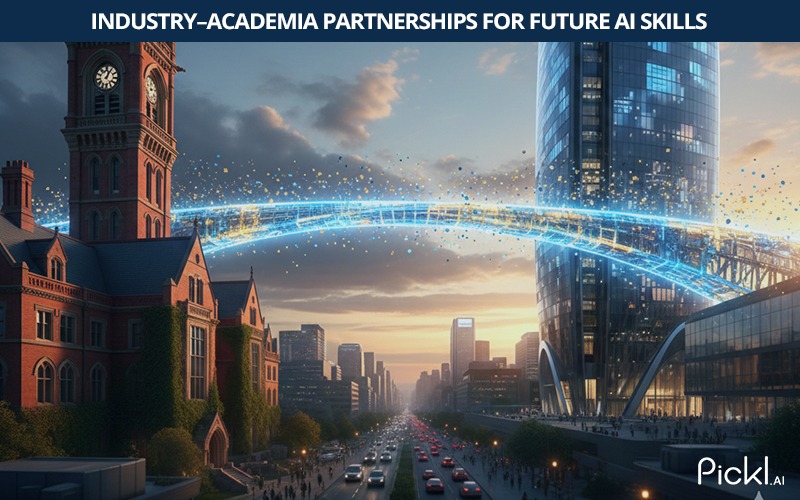
The answer lies in bridging the gap between the classroom and the corporate world. To prepare students with the necessary future skills in AI and data science, universities must move beyond theoretical learning and embrace active partnerships with the industry.
In this blog, we explore why academia must adapt, the specific skills needed for the future, and how successful models—like the collaboration between Pickl.AI and universities like LPU—are setting the standard for modern education.
What Are Future Skills in AI and Data Science?
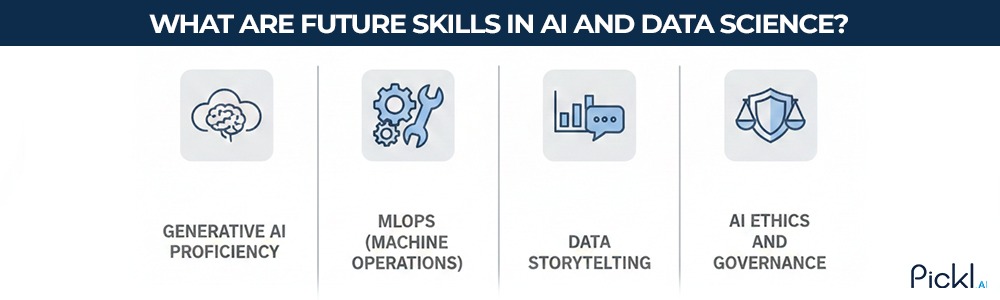
When we talk about future skills in AI and data science, we are looking beyond basic coding. While Python and SQL remain essential, the industry is shifting toward more complex, integrated competencies.
Future skills include:
- Generative AI Proficiency: Understanding Large Language Models (LLMs) and Prompt Engineering.
- MLOps (Machine Learning Operations): The ability to not just build a model, but to deploy and maintain it in production.
- Data Storytelling: The soft skill of translating complex data insights into business strategies.
- AI Ethics and Governance: Understanding bias, data privacy, and the responsible use of AI.
These are not skills you can learn easily from a textbook printed five years ago; they require real-time exposure to the market.
Why Academia Must Adapt to Stay Relevant
The traditional academic curriculum update cycle takes 2 to 3 years. In contrast, AI technology updates every 2 to 3 months. This speed mismatch creates a “relevance gap.”
If universities continue to teach only foundational theory, they risk producing graduates who are “unemployable” upon exit. To remain prestigious and effective, academia must pivot from a “knowledge-transfer” model to a “skill-building” model. This is only possible through industry-academia collaboration in AI, where industry partners provide the “live” curriculum that keeps the university relevant.
Key Future Skills Universities Must Focus On
To ensure students are future-proof, universities need to integrate specific competencies into their syllabus:
- Advanced Machine Learning: Moving beyond regression models to deep learning and neural networks.
- Cloud Computing for AI: Using platforms like AWS, Azure, or Google Cloud to handle big data.
- Domain Knowledge: Applying AI to specific fields like FinTech, Healthcare, or Marketing.
- Critical Thinking: The ability to question AI outputs rather than blindly accepting them.
Role of Industry–Academia Collaboration in AI Skill Development
The industry sits on the frontline of innovation. They know what is needed. Academia knows how to teach. When these two forces combine, magic happens.
Industry-academia collaboration in AI plays a pivotal role in:
- curriculum Design: Companies can vet the syllabus to ensure it matches current hiring trends.
- Access to Real Data: Textbooks use sanitized data. Industry partners provide “messy,” real-world datasets that challenge students to clean, analyze, and interpret information like actual Data Scientists.
- Mentorship: Connecting students with working professionals who can guide their career paths.
University–Industry Partnership Models for AI and Data Science
There are several ways university industry partnerships in AI and data science can be structured. The most effective model is the “Integrated Learning Model.”
Real-World Example: Pickl.AI and LPU
A standout example of this model is the strategic partnership between Pickl.AI and Lovely Professional University (LPU).
Pickl.AI recognized that while universities have the infrastructure, they often lack the specialized trainers and real-world projects needed for advanced Data Science. Through this collaboration, Pickl.AI integrates directly into the college ecosystem.
What they do
They provide a comprehensive training module covering Data Science, Machine Learning, and AI.
How it works
Instead of theoretical lectures, students work on Capstone projects derived from real industry problems. Pickl.AI’s mentors, who are data scientists themselves, guide the students.
The Result
Students at LPU gain hands-on experience with tools currently used in top MNCs, making them job-ready from day one.
This model transforms the college from a place of learning to a place of experiencing.
How Partnerships Help Universities Stay Relevant
For a university, relevance equals reputation. By engaging in university industry partnerships in AI and data science, institutions can:
Attract Top Talent
Students prefer colleges that offer industry-backed certifications. This ensures employability once they complete the college.
Faculty Upskilling
It is not just students who learn; faculty members get exposed to new tools and methodologies through Train-the-Trainer programs.
Improved Placements
Recruiters trust candidates who have been trained by industry experts. A partnership effectively acts as a stamp of quality on the graduate.
Benefits of Industry Collaboration for Key Stakeholders
A strong partnership creates a win-win-win situation:
- For Students: They acquire future skills in AI and data science that lead to higher starting salaries and faster career growth. They leave college with a portfolio, not just a degree.
- For Universities: They see better retention rates, higher admission numbers, and improved accreditation scores (like NAAC/NBA) due to strong industry linkages.
- For Industry: They get access to a pipeline of talent that is “plug-and-play,” significantly reducing the cost and time spent on training new hires.
Challenges in Industry–Academia Collaboration
While the benefits are clear, execution can be difficult.
- Pace of Change: Academics value rigor and long-term study, while the industry values speed and agility. Balancing these two cultures can be tough.
- Intellectual Property (IP): When students work on live industry projects, questions about who owns the code or the solution can arise.
- Sustainability: profound partnerships require long-term commitment. Often, collaborations fade away after a few workshops if not structurally integrated.
Best Practices for Building Effective AI and Data Science Partnerships
To make industry-academia collaboration in AI successful, institutions should follow these best practices:
Co-Creation of Content
Don’t just buy a course. Work with partners like Pickl.AI to co-create a syllabus that fits the specific student demographic.
Internship Integration
Make industry internships a mandatory credit-bearing part of the course, not an optional summer activity.
Continuous Feedback Loops
The industry partner should review student performance and curriculum relevance every semester, not just every few years.
Live Capstone Projects
Ensure the final year project is mentored by an industry expert, ensuring the output helps build the student’s portfolio.
Future Trends in AI and Data Science Education
As we look ahead, the way we teach future skills in AI and data science will continue to evolve.
- Hyper-Personalization: AI tutors will customize the learning pace for every student.
- Interdisciplinary AI: We will see “AI for Biologists” or “Data Science for Economists” courses, requiring diverse industry partners.
- Micro-Credentials: Instead of just 4-year degrees, industry-verified “nanodegrees” focusing on specific skills (like NLP or Computer Vision) will become standard.
Conclusion
The gap between what is taught in classrooms and what is required in the boardroom is the single biggest threat to higher education today. To survive and thrive, universities cannot operate in silos.
Developing future skills in AI and data science requires a hands-on, practical approach that only the industry can provide. Collaborations, such as the one between Pickl.AI and LPU, serve as a blueprint for the future. They demonstrate that when academia and industry shake hands, the biggest winners are the students—who graduate not just with a degree, but with a career.
For universities, the message is clear: Partner with the industry today to stay relevant tomorrow.
Frequently Asked Questions
What are future skills in AI and data science?
Future skills in AI and data science include proficiency in Generative AI (LLMs), Machine Learning Operations (MLOps), ethical AI governance, data storytelling, and cloud-based AI computing.
Why do universities need industry collaboration for AI education?
Universities need collaboration because AI technology evolves faster than academic curriculums. Industry partners bring real-time knowledge, modern tools, and practical exposure that textbooks cannot provide.
How do university–industry partnerships improve AI and data science learning?
These partnerships improve learning by introducing live projects, internships, and mentorship from working professionals. This moves education from theory to practice, ensuring students are job-ready.
What role does industry play in identifying future AI skills?
The industry acts as a forecast system. Since they are adopting the technology first, they can signal to universities which tools and skills (like Python, R, or specific AI frameworks) will be in demand in the coming years.
Author
-

Written by:
Neha Singh