
Summary: Discover the essential structure of a high-impact faculty development program. This guide covers core principles, key components, and future trends. It features Pickl.AI’s successful collaboration with Manav Rachna University, showcasing how industry-led training in Data Analysis Tools bridges the gap between academic theory and real-world application.
Introduction
In the rapidly evolving landscape of higher education, the role of a university professor has transcended traditional teaching. Today’s educators are expected to be mentors, researchers, technologists, and lifelong learners.
To keep pace with these demands, universities must invest in robust faculty development programs. A well-structured program is no longer a luxury; it is a necessity for institutional excellence and student success.
Effective faculty development goes beyond occasional workshops. It requires a strategic, sustainable structure that empowers educators to master new tools—ranging from AI-driven pedagogies to advanced data analytics.
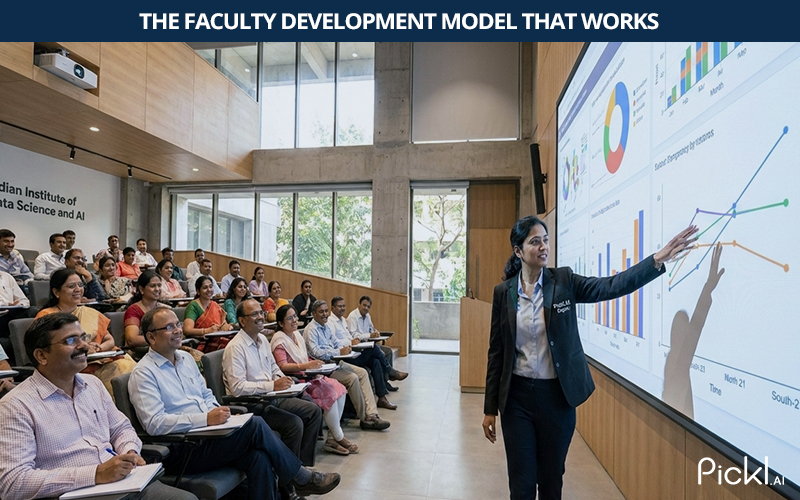
A prime example of this is the recent collaboration between industry and academia, such as Pickl.AI’s faculty development program, Faculty Development Program #FDP at Manav Rachna University. By bringing specialized industry expertise into the academic sphere, universities can bridge the gap between theoretical knowledge and real-world application.
This blog explores the best structure for a faculty development program, detailing why it matters, how to design it, and the future trends shaping university education.
What Is a Faculty Development Program?
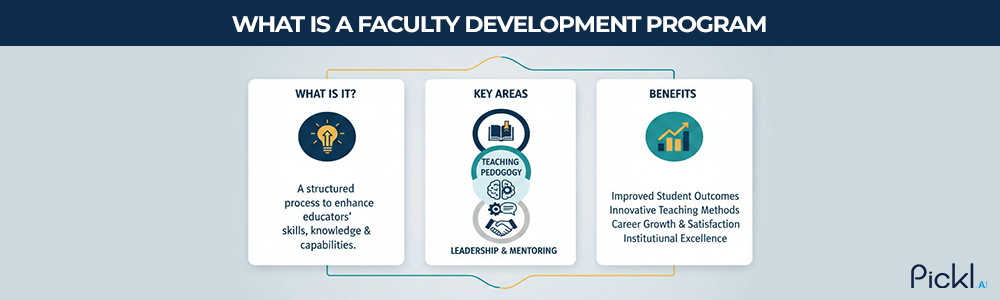
A faculty development program (FDP) is a planned series of activities designed to improve the knowledge, skills, and professional competence of faculty members. While historically focused on teaching methodologies, modern FDPs have expanded to include research capabilities, leadership skills, technical proficiency, and personal well-being.
The goal is to support faculty in their multiple roles—as teachers, scholars, and advisors. Whether it is mastering a new learning management system (LMS) or understanding the nuances of student psychology, an FDP provides the necessary training ground.
Why Universities Need a Structured Faculty Development Program
The “chalk and talk” method is becoming obsolete. Universities need a structured faculty development program for several compelling reasons:
Enhancing Student Outcomes
There is a direct correlation between faculty quality and student success. Educators who are trained in active learning strategies create more engaging classrooms, leading to higher retention and graduation rates.
Bridging the Industry-Academia Gap
As industries evolve, the curriculum often lags. FDPs that involve industry collaborations—like the one where Pickl.AI shared insights on Data Analysis Tools—ensure professors are teaching relevant, cutting-edge skills.
Faculty Retention and Satisfaction
Investment in professional growth signals that the university values its staff. This boosts morale and reduces turnover, fostering a stable academic community.
Adopting New Technologies
From AI to virtual reality, technology is reshaping education. A structured FDP ensures faculty are not overwhelmed but empowered by these tools.
Core Principles of an Effective Faculty Development Program
To create the best faculty development program structure, universities should adhere to these core principles:
- Continuous and Sustained: Development is a journey, not a one-time event. Programs should be ongoing rather than sporadic.
- Learner-Centered: Just as students have diverse learning styles, so do faculty. Programs should offer varied formats (workshops, peer mentoring, self-paced modules).
- Relevance: Content must be immediately applicable to the faculty’s daily work.
- Collaboration: Encouraging peer-to-peer learning fosters a community of practice where faculty can share successes and challenges.
Key Components of the Best Faculty Development Program Structure
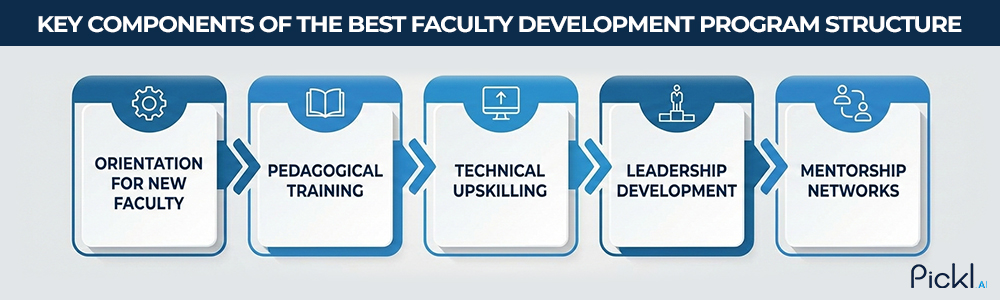
A successful university faculty development program typically includes the following structural components:
Orientation for New Faculty
A comprehensive onboarding process that introduces new hires to the institution’s culture, teaching resources, and student demographics.
Pedagogical Training
Workshops on curriculum design, assessment strategies, and inclusive teaching practices.
Technical Upskilling
Sessions focused on specific tools. For instance, sharing insights on how to use Data Analysis Tools during the session at Manav Rachna University. Such targeted technical training is crucial for modernizing research and instruction.
Leadership Development
Preparing senior faculty for administrative roles such as department heads or deans.
Mentorship Networks
Pairing experienced faculty with junior colleagues to provide guidance and support.
Designing University Faculty Development Programs
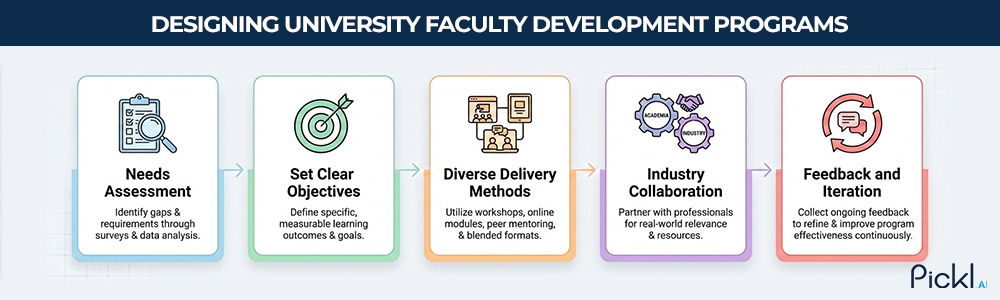
Designing a faculty development system requires a strategic approach:
- Step 1: Needs Assessment: innovative programs start by asking faculty what they need. Surveys and focus groups can identify gaps in skills or resources.
- Step 2: Set Clear Objectives: Define what success looks like. Is the goal to increase research output? Improve student feedback scores?
- Step 3: Diverse Delivery Methods: Use a mix of in-person seminars, webinars, and “lunch and learn” sessions. For technical topics like Data Science, hands-on labs are essential.
- Step 4: Industry Collaboration: Partner with ed-tech companies and industry leaders. The Faculty Development Program #FDP at Manav Rachna University with Pickl.AI serves as a perfect model. By bringing in data science experts, the university provided its faculty with high-value, practical exposure to industry-standard tools, enriching the learning ecosystem.
- Step 5: Feedback and Iteration: Collect feedback after every session to refine and improve future programs.
Common Challenges in Faculty Development and How to Address Them
When it comes to implementing faculty development programs may have certain challenges that come in the way of seamless integration of these programs.
Time Constraints
Faculty are often overburdened. Solution: Offer micro-learning modules and schedule sessions during non-peak times.
Resistance to Change
Some faculty may be skeptical of new methods. Solution: Showcase success stories and provide evidence-based reasons for changes.
Future Trends in Faculty Development for Universities
The future of university faculty development programs is dynamic and digital. There are many new changes that will be unfurling in the times to come. Here are a few of them:
Data-Driven Faculty Development
Using analytics to personalize development paths for individual professors based on their specific strengths and weaknesses.
AI and Automation
Training faculty not just on AI, but with AI tools that can assist in grading and course design. As automation continues to grow, the need for qualified professionals also grows. With the right faculty development program professors and teachers can learn about new technologies and integrate the same in their teaching methodology.
Micro-Credentials for Faculty
Issuing digital badges and certificates for completing specific modules adding tangible value to their professional portfolio.
Global Collaboration
Virtual FDPs that allow faculty to connect with peers worldwide to exchange global best practices.
Conclusion
A robust faculty development program is the backbone of a progressive university. It ensures that educators remain inspired, skilled, and capable of guiding the next generation. The collaboration between Pickl.AI and Manav Rachna University exemplifies how targeted, industry-relevant training can transform the academic experience.
By adopting a structured, inclusive, and forward-looking approach, universities can build a faculty development system that stands the test of time, benefiting faculty, students, and the institution alike.
Frequently Asked Questions
What is a faculty development program?
A faculty development program is a planned and organized initiative by educational institutions to enhance the professional skills of their faculty members. It covers areas such as teaching methodologies, research capabilities, technological proficiency, and leadership skills to improve overall educational quality.
Why do universities need a structured faculty development program?
Universities need structured programs to ensure consistent quality in education, keep faculty updated with rapid technological changes, improve student retention and outcomes, and boost faculty morale and job satisfaction.
What are the key components of an effective faculty development program?
Key components include new faculty orientation, pedagogical training (teaching methods), technical upskilling (e.g., Data Analysis Tools), research support, leadership development, and peer mentorship networks.
How can universities measure the success of faculty development programs?
Success can be measured through participant feedback surveys, pre- and post-training assessments, analysis of student performance metrics, observation of classroom practices, and tracking the implementation of new skills (like using new software or teaching strategies).
How is a faculty development system different from a faculty development program?
A faculty development program usually refers to a specific set of events, workshops, or courses (e.g., a 3-day workshop on AI). A faculty development system refers to the broader, holistic infrastructure and culture within the university that supports ongoing growth. The system includes the policies, budget, resources, centers, and long-term strategy that make individual “programs” possible and sustainable.
Author
-

Written by:
Neha Singh