
Summary: This article outlines 10 trends to drive growth through industry partnerships with universities. From prioritizing talent access and simplifying contracts to embracing flexible IP and regional collaboration, these strategies help higher education institutions secure funding, innovation, and stronger corporate relationships.
Introduction
University leaders today face a changing landscape. Federal funding is tightening. Student enrollment is shifting. In response, higher education is turning toward industry partnerships to drive growth. These collaborations are no longer just about basic research. They are about innovation, workforce readiness, and regional economic growth.
To succeed, universities must adapt. They must move beyond traditional models. Here are 10 trends that are shaping the future of industry partnerships with universities.
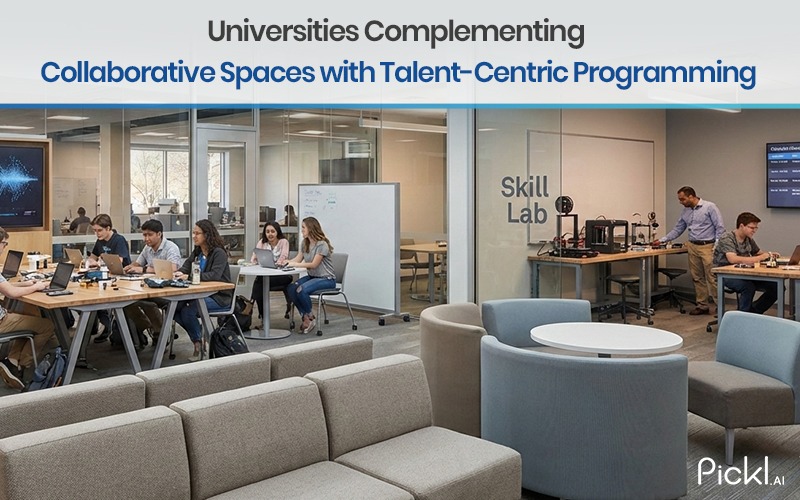
1. Universities Complementing Collaborative Spaces with Talent-Centric Programming
Physical spaces are not enough. In the past, universities built innovation parks and hoped companies would come. Now, the focus has shifted. Successful industry partnerships rely on active programming that connects companies with students.
Universities are now curating “talent-centric” zones. These are collaborative spaces where students and industry professionals work side-by-side. For example, a university might host a coding boot camp within a corporate innovation hub. This gives companies a front-row seat to potential hires. It turns a static building into a dynamic talent pipeline. Companies value this access more than the square footage itself.
2. University Leaders Centering Industry’s Interest in Sponsored Research Partnerships Around Access to Talent
Talent is the new currency. When companies fund research, they often have a secondary motive. They want to spot the best graduate students. University leaders are now explicitly designing research agreements to highlight this benefit.
Instead of just selling “solutions,” universities are selling “access.” A sponsored research contract might now include provisions for student internships or mentorships. This approach appeals to corporate HR departments as much as R&D teams. It solves a major pain point for business: finding skilled workers. By framing industry partnerships as talent acquisition strategies, universities attract more corporate investment.
3. Leaders Centralizing University Partnership Access Point to Promote Deeper Business Engagements
Navigating a university can be hard. Companies often do not know who to call. They get bounced from department to department. To fix this, forward-thinking universities are creating a “front door” for industry.
This is a centralized office or online portal. It handles all corporate requests. Whether a business wants to license tech, sponsor a lab, or hire grads, they start here. This “One University” approach simplifies the process. It makes it easier for companies to engage deeply. It also allows the university to track relationships better. A centralized team can spot opportunities to upsell a simple recruiting partner into a major research sponsor.
4. Universities Using Applied Research Arrangements to Access Large Pool of Industry Research Funding
Industry moves fast. Businesses need practical solutions, not just theoretical knowledge. Universities are responding by embracing applied research. This is research designed to solve specific, immediate problems.
By focusing on applied research, universities tap into larger corporate budgets. Companies are willing to pay for results they can use right away. This requires a cultural shift in some academic departments. However, the financial upside is huge. It allows universities to diversify their funding sources. It reduces reliance on slow-moving government grants. This trend is making industry partnerships with universities more dynamic and results-oriented.
5. Large Companies Less Interested in University Intellectual Property
The old model of IP is fading. Historically, universities fought hard to own every patent. They wanted to collect royalties. Today, many large companies find this approach too slow and risky. They prefer “freedom to operate.”
Companies want to use the research results without complex licensing deals. University leaders are adapting by offering flexible IP terms. Some are giving sponsors non-exclusive rights for free. Others offer simple, upfront fees instead of long-term royalties. This removes friction. It encourages companies to fund more projects. The goal is to maximize the volume of research, not just the royalty per patent.
6. Universities Targeting Support of Innovative Ventures to Maximize Investment Return
Startups are a growth engine. Universities are doing more than just licensing tech to big firms. They are actively building new companies. This trend involves supporting university-spinouts and local startups.
Universities are creating venture funds. They are offering incubator space. In exchange, they often take equity (ownership shares) in these young companies. If a startup succeeds, the financial return can be massive. This strategy aligns the university’s success with the success of its innovators. It also creates a buzz on campus. It attracts entrepreneurial faculty and students who want to build the next big thing.
7. University Leaders Signaling a Business-Friendly Environment Through Templatized Partnership Agreements
Time kills deals. Lengthy contract negotiations scare away corporate partners. To fix this, universities are using standardized templates. These are pre-approved contracts for common partnership types.
These “express agreements” cover standard terms like confidentiality and liability. They allow deals to be signed in days, not months. This signals to the market that the university is “open for business.” It lowers the legal costs for both sides. By removing administrative hurdles, universities can close more deals. This efficiency is a key competitive advantage in attracting industry partnerships.
8. Joint Government-Industry Funding Programs Growing in Scale and Boosting University Research Strength
The government is encouraging collaboration. Federal agencies are increasingly designing grants that require industry participation. These are “matching” programs. The government puts up money, but only if an industry partner matches it.
University leaders are using these programs to court companies. They can approach a business and say, “Your investment will be doubled by federal funds.” This is a powerful value proposition. It effectively discounts the cost of R&D for the company. These joint programs are growing in scale. They are becoming a primary driver of large-scale university research centers.
9. Regional Economic Development Entities Partnering with Universities to Catalyze Industry Investment
Geography matters. Universities are powerful economic anchors. Regional development groups know this. They are partnering with universities to attract foreign investment and major corporate headquarters.
In this model, the university is part of the regional sales pitch. A city might offer a company tax breaks, while the local university offers a custom workforce training program. These three-way partnerships (City, University, Industry) are very effective. They create a local ecosystem where businesses can thrive. For the university, it brings new industry partnerships right to their doorstep. It cements their role as a leader in the local economy.
10. Universities Collaborating via Interinstitutional Research Consortia to Better Attract Industry
There is strength in numbers. Sometimes, one university is not enough. To solve complex problems, universities are forming consortia. These are groups of institutions that work together.
By pooling resources, they offer more value to industry. A consortium might offer access to five different labs and 50 experts across three states. This is attractive to large multinationals. They can sign one agreement and access a massive network.
It allows smaller universities to punch above their weight. It allows larger universities to tackle grand challenges. This collaborative approach is redefining how industry partnerships with universities operate on a global scale.
Conclusion
The future of higher education growth lies in collaboration. By adopting these ten trends, university leaders can build stronger, more profitable relationships with the private sector. The shift is clear: move from transactional deals to strategic alliances. Focus on talent, speed, and flexibility.
Those who master these industry partnerships will secure their financial future. They will provide better opportunities for their students. And they will drive innovation that benefits society as a whole.
Frequently Asked Questions
Why are industry partnerships important for universities?
Industry partnerships provide critical funding outside of government grants. They offer real-world experience for students and help faculty apply their research. These collaborations also boost the local economy and keep the university curriculum relevant to modern workforce needs.
What do companies look for in university partnerships today?
Companies primarily look for access to talent. They want to hire skilled graduates. Also seek access to specialized research facilities and “freedom to operate” regarding intellectual property. They value speed, simplicity, and a centralized point of contact.
How can universities attract more industry-sponsored research?
Universities can attract more funding by streamlining their contract processes. Using standard templates helps. prioritizing applied research that solves business problems is also key. Offering flexible IP terms and matching government funds can also make the university more attractive to corporate sponsors.
What trends are shaping the future of university–industry collaboration?
Key trends include a focus on talent acquisition over just pure research. There is also a move toward centralized “front door” offices for business. We are seeing more flexible IP models, support for university-backed startups, and large-scale consortia where multiple universities work together to serve industry needs.
Author
-

Written by:
Neha Singh