
Summary: Industry partnerships are crucial for effective placement support in modern education. This blog explores how collaborations, like those with Pickl.AI, bridge the skills gap by upgrading curriculums with trending technologies. Learn how live projects and mentorships enhance student employability and why colleges must treat companies as educational partners.
Introduction
In the fast-paced world of higher education, the ultimate measure of a college’s success is the employability of its students. For years, academic institutions focused primarily on theoretical knowledge. However, the modern job market has shifted. Today, a degree alone is often not enough to secure a high-paying role. This is where effective placement support comes into play.
But what separates a standard college placement cell from a high-performing one? The answer lies in industry partnerships.
Collaboration between academia and the corporate world is no longer just a “nice-to-have”; it is a necessity. In this blog, we will explore how robust industry connections transform placement support services, bridge the skills gap, and launch successful careers.
Understanding Placement Support
Before diving into partnerships, we must understand what modern placement support actually entails. It is not merely a notice board where job openings are pinned.
Effective placement support is a holistic ecosystem designed to transition a student from a classroom learner to a workplace professional. It encompasses career counseling, resume building, soft skills training, mock interviews, and, ultimately, connecting students with recruiters. When we talk about placement assistance, we refer to the entire journey of preparing a student to be “market-ready.”
Why Placement Support Matters in Modern Education
The gap between what students learn in university and what companies expect is often widening. A recent employability report suggested that a significant percentage of engineers and management graduates lack the specific functional skills required for the job.
Placement support matters because:
- It Bridges the Skills Gap: It identifies missing skills and provides training to fill them.
- It Saves Time: Instead of a graduate spending six months hunting for a job, structured support accelerates the hiring process.
- It increases ROI: Students invest time and money in education; placement support services ensure they get a return on that investment in the form of a lucrative career.
How Industry Partnerships Strengthen Placement Support
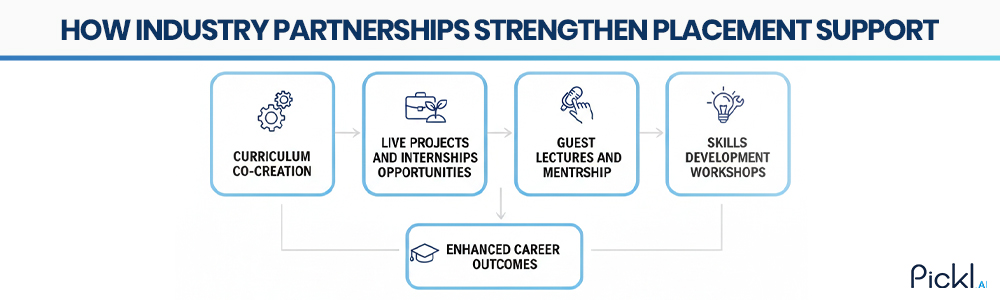
The strongest placement support teams do not work in silos; they co-create value with the industry. Here is how industry partnerships act as the backbone of successful placements:
Curriculum Co-Creation
The biggest complaint from recruiters is that the syllabus is outdated. When colleges partner with industries, companies can provide input on the curriculum. They suggest tools, software, and case studies that are currently relevant, ensuring students learn what is actually in demand.
Live Projects and Internships Opportunities
Theory is good, but practice is better. Industry partnerships open doors for internships where students work on real-time problems. This experience is invaluable during final placements, as candidates can discuss real contributions they made rather than just textbook concepts.
Guest Lectures and Mentorship
Who better to teach students about corporate culture than corporate leaders themselves? Strong partnerships facilitate regular guest lectures, webinars, and mentorship programs where industry experts guide students. This exposure makes the placement assistance process much smoother, as students are already familiar with industry expectations.
Impact of Industry Partnerships on Student Employability
When a college has active industry partnerships, the impact on student employability is immediate and measurable.
- Confidence Boost: Students who have interacted with industry professionals during their course are less intimidated during interviews.
- Skill Relevance: Graduates enter the market knowing the latest tools (e.g., Python, Tableau, or Salesforce) because their college’s partners ensured these were taught.
- Networking: These partnerships often give students direct access to HR managers and team leads, creating a professional network before they even graduate.
Models of Industry-Aligned Placement Programs
To understand how this works in the real world, let’s look at collaborative models. The most successful model today is the “Train-and-Hire” or “Curriculum Integration” model.
Real-World Example: Pickl.AI and College Collaborations
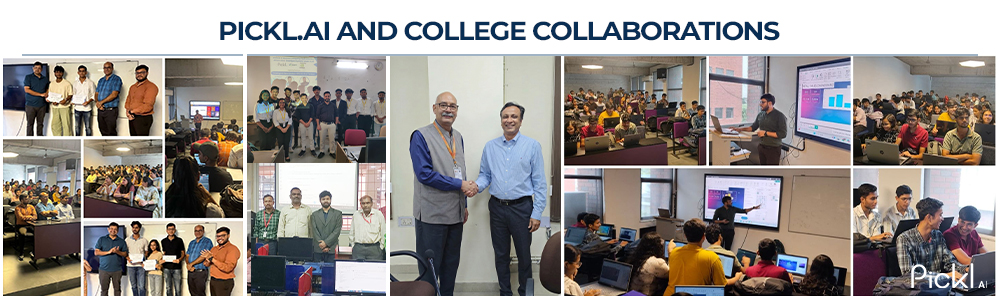
A prime example of industry partnerships revolutionizing education is the work being done by Pickl.AI. Unlike traditional training centers, Pickl.AI collaborates directly with colleges to upgrade their curriculum.
Recognizing the surge in demand for data professionals, Pickl.AI helps institutions integrate modules on Artificial Intelligence, Data Analytics, and Data Science directly into their academic framework. They provide:
- Trending Technology Training: Ensuring students aren’t learning outdated coding languages.
- Capstone Projects: Real-world data sets for students to solve.
- Placement Assistance: By training students on these high-demand skills, they make the students infinitely more attractive to recruiters.
This model ensures that the placement support provided by the college is backed by genuine, high-quality technical training that the industry respects.
How Universities Can Build Strong Industry Partnerships
For universities looking to enhance their placement support services, building these connections requires a strategic approach:
- Corporate Advisory Boards: Invite industry leaders to sit on the college board. Their insights will guide the placement support strategy.
- Leverage Alumni Networks: Alumni are the easiest bridge to industry. They can facilitate introductions to their current employers.
- Memorandums of Understanding (MoUs): Sign formal agreements with companies for exclusive internship rights and “first day” recruitment privileges.
- Faculty Immersion Programs: It’s not just students who need training; faculty should spend time in industries to update their own teaching methods.
The Future of Placement Support Through Industry Collaboration
The future of placement support is hyper-specialized. We are moving away from generic “aptitude training” toward role-specific preparation.
In the coming years, we will see:
- Just-in-Time Learning: Colleges partnering with ed-tech firms to teach a specific tool (like Generative AI) just months before placement season.
- Virtual Internships: Industry partnerships will allow students to complete global internships remotely, widening their placement scope.
- Data-Driven Matching: Placement cells will use AI to match a student’s specific skill set with the specific needs of an industry partner, ensuring a higher success rate.
Conclusion
Placement support is no longer just a backend administrative function; it is the frontline of a university’s value proposition. However, this support cannot exist in a vacuum. It requires the active, continuous engagement of the corporate world.
Industry partnerships are the fuel that powers the placement engine. They ensure curriculums are relevant, provide crucial practical exposure, and open doors that remain closed to others. As seen with examples like Pickl.AI, when education providers and industry experts shake hands, the biggest winners are the students.
For any institution aiming to improve its placement records, the message is clear: Stop looking at companies only as recruiters, and start treating them as partners in education.
Frequently Asked Questions
How do industry partnerships improve placement support?
Industry partnerships improve placement support by updating curriculums to match market needs, providing internship opportunities, and offering direct mentorship from corporate experts, making students more employable.
Does placement support guarantee a job?
No, placement support does not guarantee a job. It provides the necessary tools, training, and opportunities (interviews) to land a job. The final selection depends on the student’s performance and skills.
Why are industry collaborations important for freshers?
Freshers often lack practical experience. Industry collaborations provide access to live projects, internships, and exposure to corporate culture, bridging the gap between theory and practice.
Author
-

Written by:
Neha Singh