
Why Structured Internship Programs Are the Key to Improving Campus Placements
Summary: Structured internship programs bridge the gap between academic learning and industry expectations. By offering real-world exposure, mentorship,…
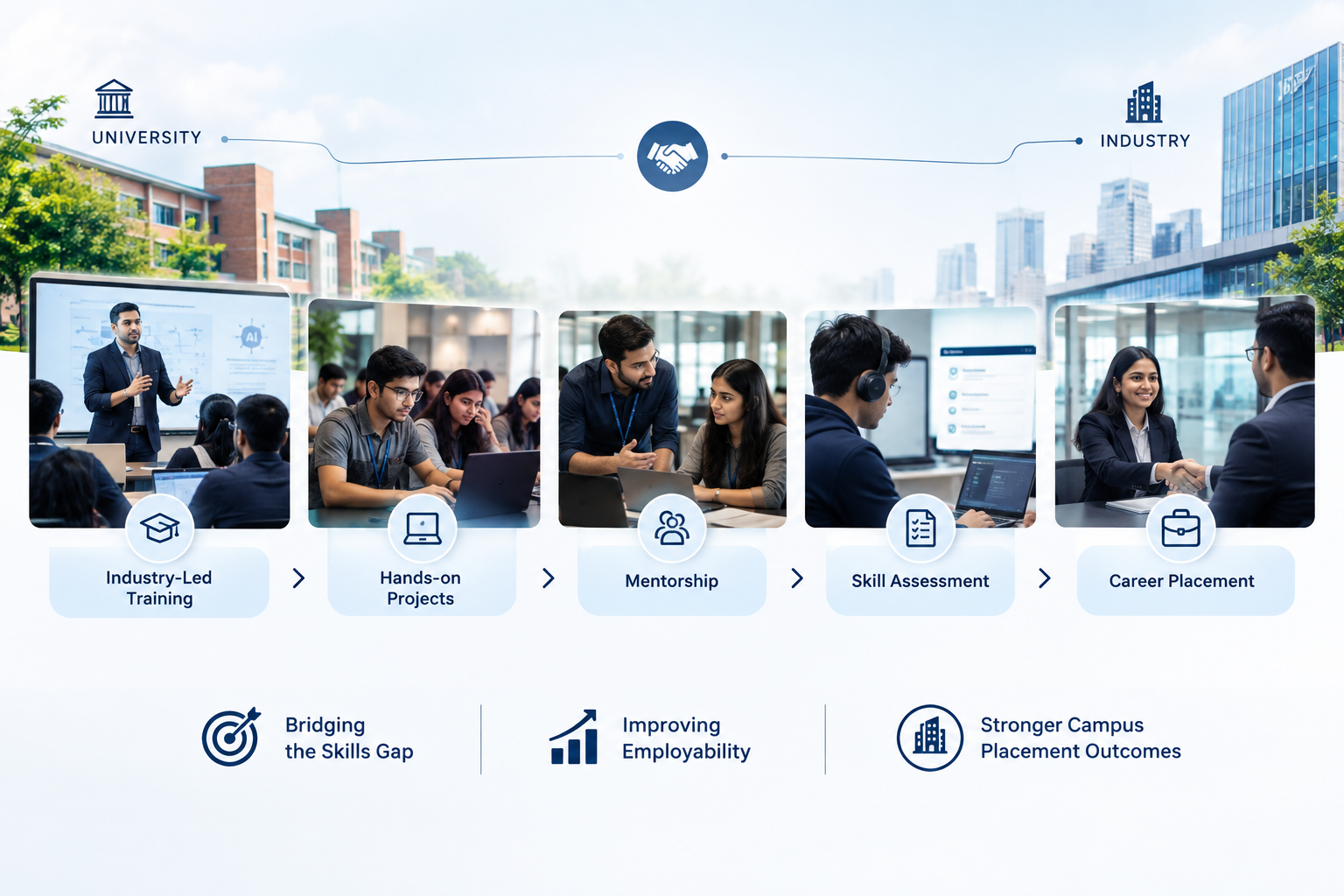
Summary: Structured internship programs bridge the gap between academic learning and industry expectations. By offering real-world exposure, mentorship, skill development, and measurable outcomes, they help students become job-ready. For institutions, these programs strengthen industry partnerships and improve placement outcomes. A well-designed internship ecosystem ultimately creates confident, skilled graduates who are better prepared for successful careers.
Introduction
Structured internship programs have become a cornerstone in defining the success of an organization. They build the gap between academics and industry expertise. Over the years, there has been a growing demand for individuals who not only have theoretical expertise, but also have knowledge about the practical implication that eventually helps them easily adapt to the demand in the real-world setup.
Today, organizations are more focused on hiring individuals who have completed an internship or have industry certification. It highlights their credibility and a proactive approach towards making their career a success.
The conventional pedagogy is taking a backseat; students are keen to enrol in courses where they not only gain theoretical knowledge but also get exposure to newer skills. Did you know that across IITs nationally, 8,000 of 21,500 graduates remain unemployed?
Colleges and universities also realize the profound role of internships in campus placements. They are now fostering industry associations, promoting internship programs for universities that can help students acquire industry knowledge and acquire job-ready skills. This eventually reflects in campus placement and maps the positive trajectory of growth for institutional excellence.
What Are Structured Internship Programs?
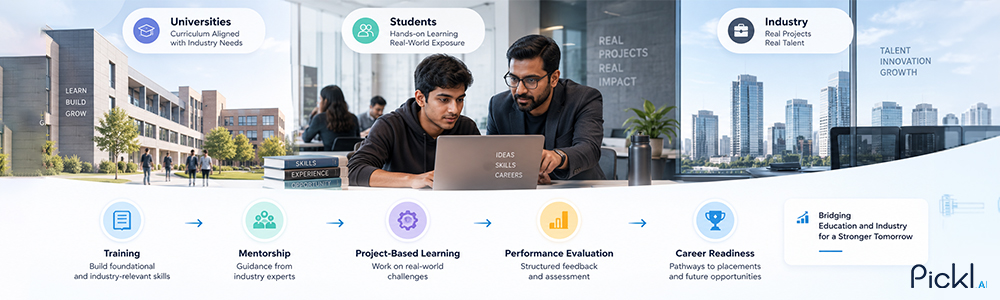
Structured internship programs are specially designed courses in collaboration with industries. Many companies offer summer and winter internship programs, making it easier for colleges to blend these programs with the regular courses. These internship programs feature specific learning objectives. These programs are designed by industry experts who extract their learning and knowledge to create a practical learning program.
Students with internship experience are 57.5% more likely to receive job offers compared to those who don’t have internship experience. Well-structured internships involve mentoring, supervision, and opportunities for feedback and reflection. Here are some of the key steps of internship programs for universities:
| Planning | It is important to define the goal and objective of the internship program. |
| Recruitment | Reaching out the right candidate |
| Selection | Screening for success |
| Training and Supervision | Quality learning leads to quality work, regular guidance and mentoring plays a crucial role. |
| Evaluation and Feedback | Constant feedback and performance monitoring |
| Compensation and Benefits | Reward your interns. |
Why Do Traditional Campus Placements Fail Without Internships?
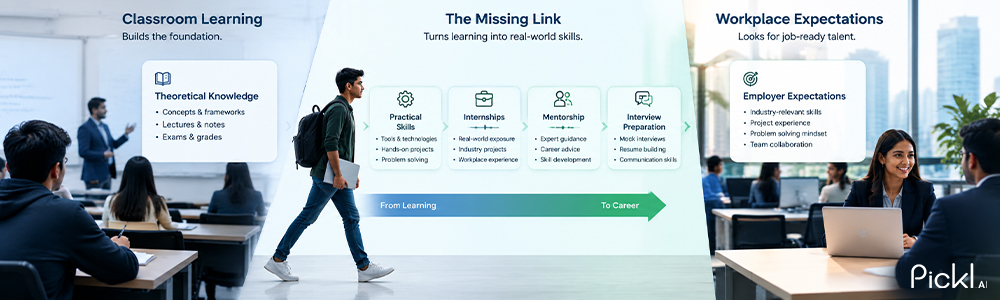
One of the key challenges that most colleges and universities undermine is that they fail to establish a link between theoretical learning and real-world corporate execution. Recruiters often prefer hiring candidates who can demonstrate applied skills and an understanding of workplace culture. However, many institutes still continue to follow the age-old teaching methodology. This leads to several disadvantages.
1. Skill Gap Analysis & Employer Expectations
As per the recent survey, only 8.5% of graduates in India could secure jobs that align with their current qualifications. This highlights a massive failure in skill gap analysis within conventional curricula. Employers no longer prioritize degrees alone; in fact, 60% of recruiters now value practical AI and technical skills as much as, or more than, a formal degree.
A standard placement training program often focuses on generic aptitude, but it fails to provide the specific skills for campus placements—such as software proficiency and industry-specific problem-solving—that are refined during summer internships. When institutes ignore the role of internships in campus placements, they produce graduates who are theoretically sound but practically obsolete.
2. Cost of Poor Hiring Decisions
Poor hiring can cost an organization more than hiring a talent at a higher package. The U.S. Department of Labor and SHRM estimate that the cost of a poor hiring decision is at least 30% of the employee’s first-year earnings.
To cut down on this, companies use structured internship programs for students as an “extended interview.” Data shows that 80% of employers consider internship programs to have the highest ROI for finding talent, as they offer a 53% to 63% conversion rate into full-time roles. Without these programs, universities force recruiters to take a high-stakes gamble, often leading to lower selection rates during the campus placement season.
3. Student Confidence and Readiness Issues
Theoretical learning alone creates “readiness issues” that manifest as poor interview performance. Statistics show that 89% of students who complete winter internships or summer stints report a significant boost in professional confidence. Furthermore, 84% gain clarity in their career orientation, which prevents the high turnover rates associated with “disengaged” new hires.
A traditional training and placement program cannot replicate the high-pressure environment of a real office. Without internship programs for universities, students lack the “workplace culture” competency, making them appear less “plug-and-play” than peers who have spent months in corporate settings.
4. Market Dynamics and Competition
The job market is getting competitive. As per the recent reportsRecent reports indicate that while application volumes have doubled, internship listings in certain sectors have fallen by 15% to 30%. In this hyper-competitive landscape, a graduate with only a placement training program on their resume is at a severe disadvantage.
NACE data confirms that students with internship experience receive 16% more job offers than those without.
Who Benefits from Structured Internship Programs?
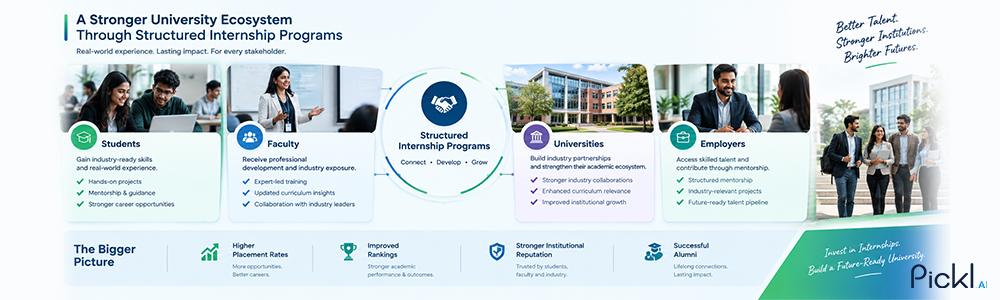
Structured internship programs have become vital for the success of educational institutes. It not only increases the employability rate, but at the same time prepares the students for the future. All of this eventually reflects on the ranking of the institutes. These internship programs bridges the gap between the academics and practical knowledge helping the institutes carve a pedagogy that is industry-aligned.
Higher Placement Rates and Employment Success
Universities can use the structured internship programs to equip the students with new technology and its relevant applications. In fact, industry-aligned internship programs help the students learn about technologies like Gen AI, Agentic AI, analytics, and more. At the same time, many platforms also provide faculty development programs that help in boosting the knowledge and skills of the professors so that they can seamlessly blend the technical expertise with their teaching methodology, making the learning more effective.
Enhanced Industry Partnerships and Collaboration
Structured programs create natural bridges between academic departments and business sectors. Universities develop strategic partnerships with leading employers, resulting in:
- Guest lectures delivered by industry professionals
- Curriculum co-design with employer input
- Equipment and technology donations from partner companies
- Sponsored research opportunities for faculty and advanced students
These partnerships reinforce university credibility and create sustainable ecosystems where industry contributes to education quality.
Improved Reputation and Academic Rankings
University rankings increasingly emphasize graduate outcomes and industry engagement. Schools with established internship programs experience:
- Enhanced reputation for practical education models
- Improved employer satisfaction scores in graduate surveys
- Better QS and Times Higher Education rankings through employment indicators
- Increased media recognition for successful student placements
Alumni Success Stories and Long-Term Impact
Internship experiences create powerful alumni narratives. Universities document and promote stories such as:
- Former interns promoted to senior leadership positions.
- Interns returning to establish scholarships.
- Alumni founding companies and hiring additional graduates.
- Successful career transitions are attributed to internship networks.
These success stories strengthen the university’s brand identity and attract higher-quality applicants.
When Should Organizations Implement Internship Programs?
Introducing internship programs at the right time is crucial. Many companies offer summer internship and winter internship programs. Collaboration with such platforms or companies becomes crucial. However, before going ahead, it is important to Strategic timing is crucial for successful internship program implementation. Organizations must align program launch with academic calendars, business cycles, and organizational readiness.
Ideal Timing in Academic Calendars
Semester-Based Planning and Execution
Fall Semester Programs (September-December):
- Aligns with academic year beginning
- Captures students after summer employment
- Allows 4-month program before spring break interruptions
- Ideal for academic credit integration
Spring Semester Programs (January-May):
- Captures students returning from internships
- Shorter duration suits specialized projects
- Less competition from summer employment
- Accommodates late hiring decisions
Summer Programs (June-August):
- Most popular timing with 68% of internships
- Full student availability
- Extended project completion periods
- High applicant volume and competitive selection
Recommended Timeline: 12-month planning cycle Optimal Program Size: 50+ interns Best Duration: 12-month with rotations Timing: Year-round rolling programs
Conclusion
Structured internship programs deliver quantifiable benefits across all participants—universities achieve 47% higher placement rates, employers reduce hiring costs by 35%, and students secure starting salaries 12-18% higher than non-interns.
Success requires strategic implementation beginning 6-12 months before the intended program launch, with careful alignment to academic calendars and organizational capacity.
By following industry-standard timelines and best practices, organizations can build sustainable internship ecosystems that strengthen talent pipelines, enhance academic-industry partnerships, and launch successful graduate careers.
Frequently Asked Questions
What is the ideal duration for a structured internship program?
6-12 months recommended, with specifics based on industry and academic calendar. Include data on correlation between duration and placement success.
How do structured internships differ from regular internships?
A structured internship program comes with clearly defined learning objectives, mentorship, and assessment. These programs focus on complete technical expertise, while also incorporating modules on soft skills that make it a holistic program catering to the demand in the industry.
What is the ROI of implementing a structured internship program?
Specific percentage improvements in placement rates (40-60% increase), cost savings in recruitment, quality of hire metrics.
Can small universities or companies implement structured internship programs?
Yes, even small universities can implement these programs. They can opt for a more viable option like virtual programs. These targeted programs focus on providing expertise through virtual programs. Many platforms offer a partnership model, where the university can collaborate with them and offer the program on a shared revenue model.
How do you measure the success of a structured internship program?
When signing up for a structured internship programs, institutes should specifically define their objectives like placement rate improvement, time-to-hire reduction, employer satisfaction scores, student feedback, conversion rates, and starting salary increases.